Pest guide
Berlin beetle
Trogoderma angustum
Adult: 2.2–3.9 mm · Larva: up to 8 mm
- Do you need a pest-control professional?
It depends
Whether professional treatment is needed depends on the extent and circumstances. Possible response: Inspect food, discard infested products and clean.
- Potential harm
Larvae feed on dried food, seeds and other organic materials
- What to expect
Possible response: Inspect food, discard infested products and clean. If you are unsure of the species, call and describe what you found before deciding what to do.
Not sure? Call and describe it. Identification by phone is free.
About this species
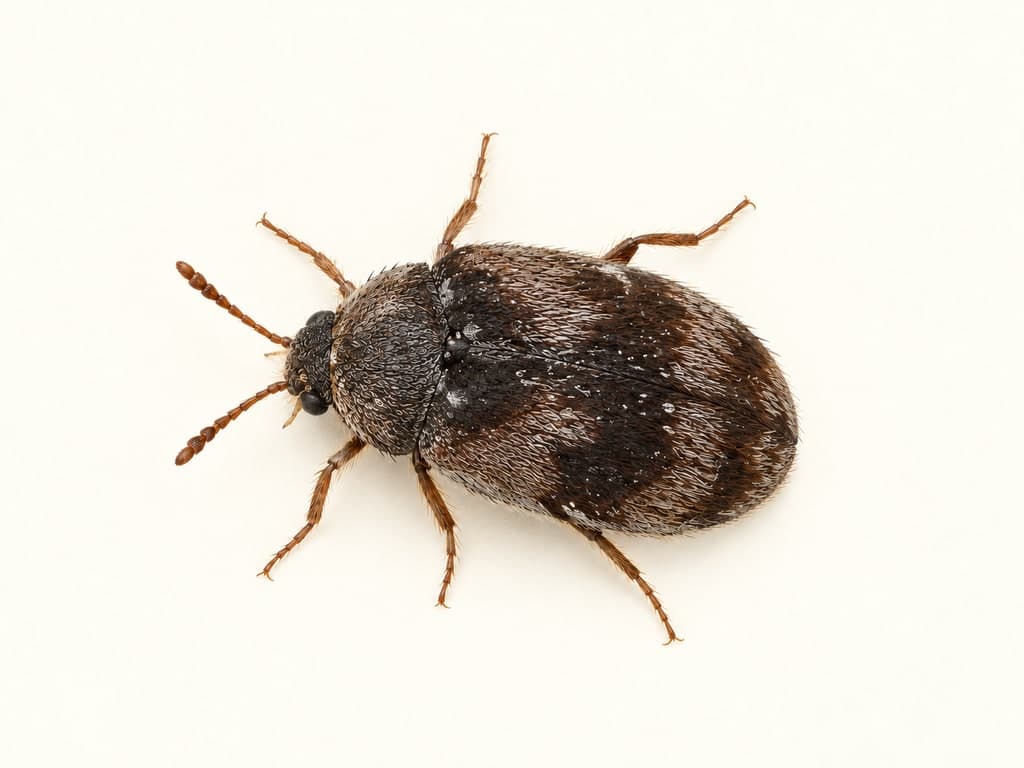
The Berlin beetle is a tiny dark beetle with pale wavy markings on its wing cases, now well established in Icelandic homes. Its hairy larvae feed on dried food, seeds and organic debris that collects in cupboards, drawers and windowsills. Adults often appear at windows in spring as they move towards the light.
Facts
- Latin name
- Trogoderma angustum
- English name
- Berlin beetle
- Preferred conditions
- Dried food
- Life cycle
- Larval development can take 65–400 days, depending on temperature
Response and treatment
Inspect food, discard infested products and clean
Treatment depends on the species, extent and circumstances. Products are not always needed. Any products used are permitted for the intended use in Iceland. Follow their instructions and the pest-control professional’s guidance.
Do you have an unwelcome visitor?
Call and describe it. Advice is free, and one phone call often solves the problem.