Pest guide
Clothing moth
Tineola bisselliella
Adult: 5–8 mm · Larva: 1–10 mm
- Do you need a pest-control professional?
It depends
Whether professional treatment is needed depends on the extent and circumstances. Possible response: Inspect textiles, clean and treat as needed.
- Potential harm
Feeds on wool, fur and other natural-fibre clothing
- What to expect
Possible response: Inspect textiles, clean and treat as needed. If you are unsure of the species, call and describe what you found before deciding what to do.
Not sure? Call and describe it. Identification by phone is free.
About this species
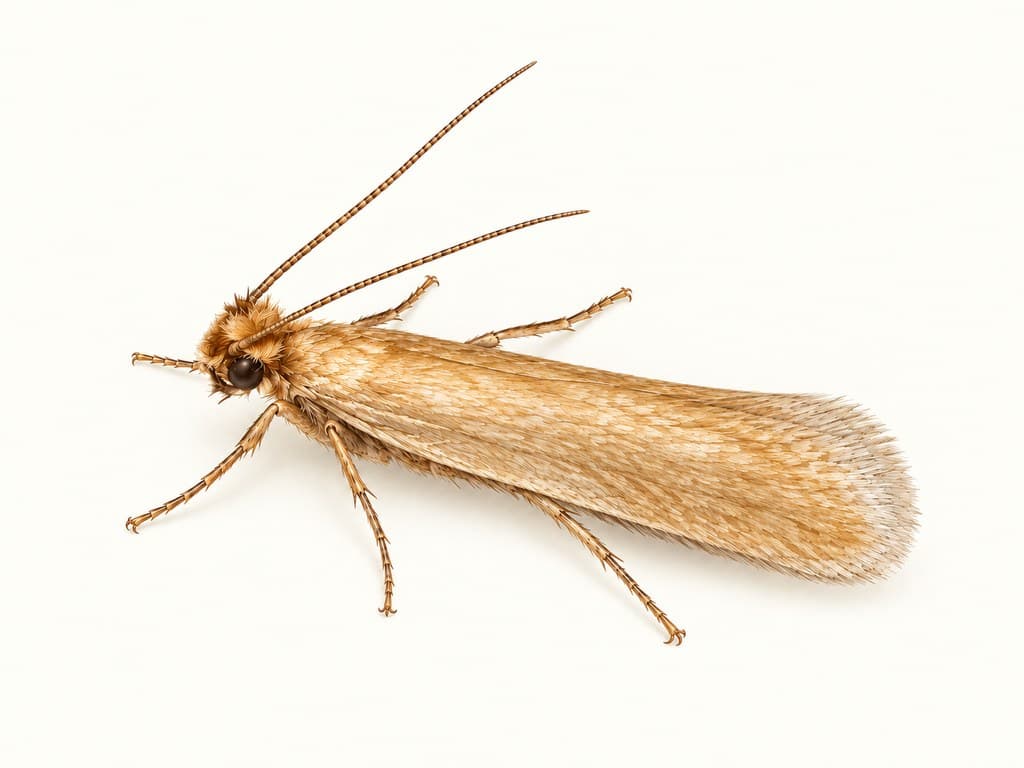
The clothing moth is a small golden clothes moth that avoids light and flies hesitantly, often appearing when a wardrobe is opened. Its larvae cause the damage, feeding on wool, fur and other animal fibres and leaving holes and fine silk threads. They favour unused woollen clothing, carpets and fur stored in dark cupboards and storage spaces.
Holes in woollen clothes: could it be clothes moths?
Clothes moth larvae can chew holes in wool and fur. Check unused clothing, carpets and dark storage places for larvae and fine silk threads. Inspecting textiles and cleaning are the first steps. Assess whether further treatment is needed.
Facts
- Latin name
- Tineola bisselliella
- English name
- Clothing moth
- Preferred conditions
- Natural-fibre clothing
- Life cycle
- Varies with conditions and life stage
Response and treatment
Inspect textiles, clean and treat as needed
Treatment depends on the species, extent and circumstances. Products are not always needed. Any products used are permitted for the intended use in Iceland. Follow their instructions and the pest-control professional’s guidance.
Do you have an unwelcome visitor?
Call and describe it. Advice is free, and one phone call often solves the problem.