
Pest guide
Indian meal moth
Plodia interpunctella
Adult: 5–10 mm · Larva: 12–14 mm
- Do you need a pest-control professional?
It depends
Whether professional treatment is needed depends on the extent and circumstances. Possible response: Inspect food, discard infested products and clean.
- Potential harm
Larvae spin webbing in and damage dry goods and feed
- What to expect
Possible response: Inspect food, discard infested products and clean. If you are unsure of the species, call and describe what you found before deciding what to do.
Not sure? Call and describe it. Identification by phone is free.
About this species
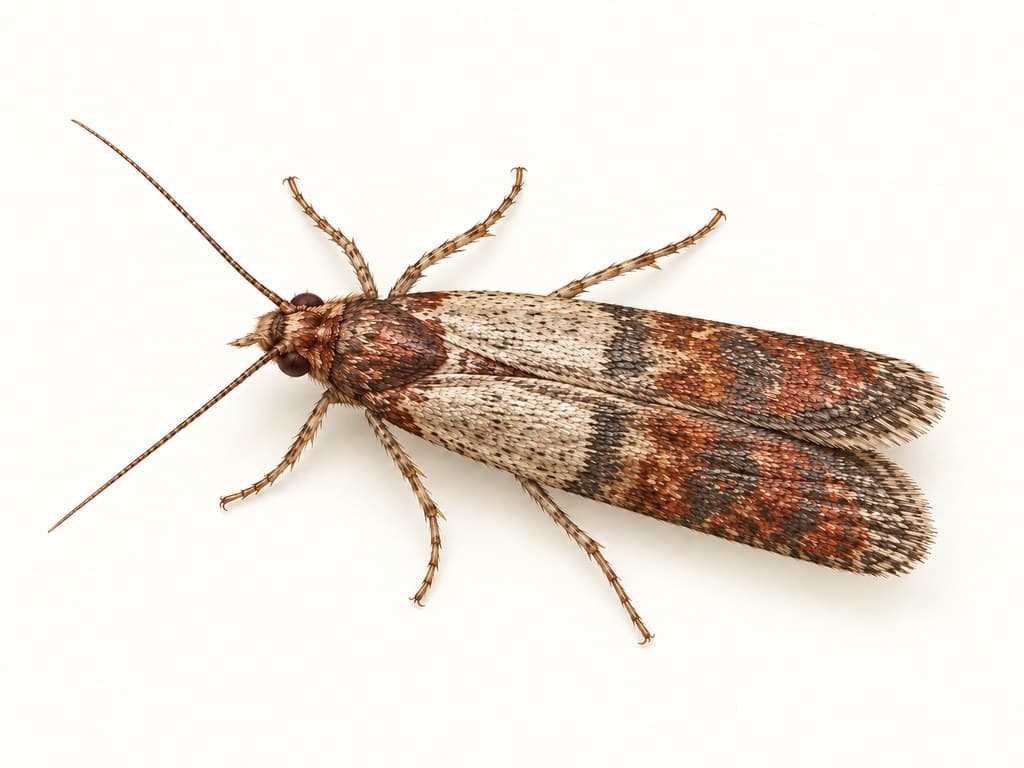
The Indian meal moth is a small pantry moth with pale grey inner forewings and copper-brown outer sections. Its larvae spin fine threads through nuts, dried fruit, cereals and pet food, leaving clumps of webbing inside packages. Adults flutter around kitchens at dusk and rest on walls and ceilings.
Pantry moths in the kitchen?
Check dry foods, including nuts, dried fruit, cereals and pet food. Indian meal moth larvae can leave webbing and clumps inside packages. Discard infested food and clean cupboards and storage spaces. A persistent or widespread problem calls for assessment of further action.
Facts
- Latin name
- Plodia interpunctella
- English name
- Indian meal moth
- Preferred conditions
- Dry goods in kitchen cupboards
- Life cycle
- Varies with conditions and life stage
Response and treatment
Inspect food, discard infested products and clean
Treatment depends on the species, extent and circumstances. Products are not always needed. Any products used are permitted for the intended use in Iceland. Follow their instructions and the pest-control professional’s guidance.
Do you have an unwelcome visitor?
Call and describe it. Advice is free, and one phone call often solves the problem.