Pest guide
Crane fly
Tipula rufina
- Do you need a pest-control professional?
No
Professional treatment is usually unnecessary. Possible response: Let the insect outside, treatment is usually unnecessary.
- Potential harm
Harmless to people
- What to expect
Possible response: Let the insect outside, treatment is usually unnecessary. If you are unsure of the species, call and describe what you found before deciding what to do.
Not sure? Call and describe it. Identification by phone is free.
About this species
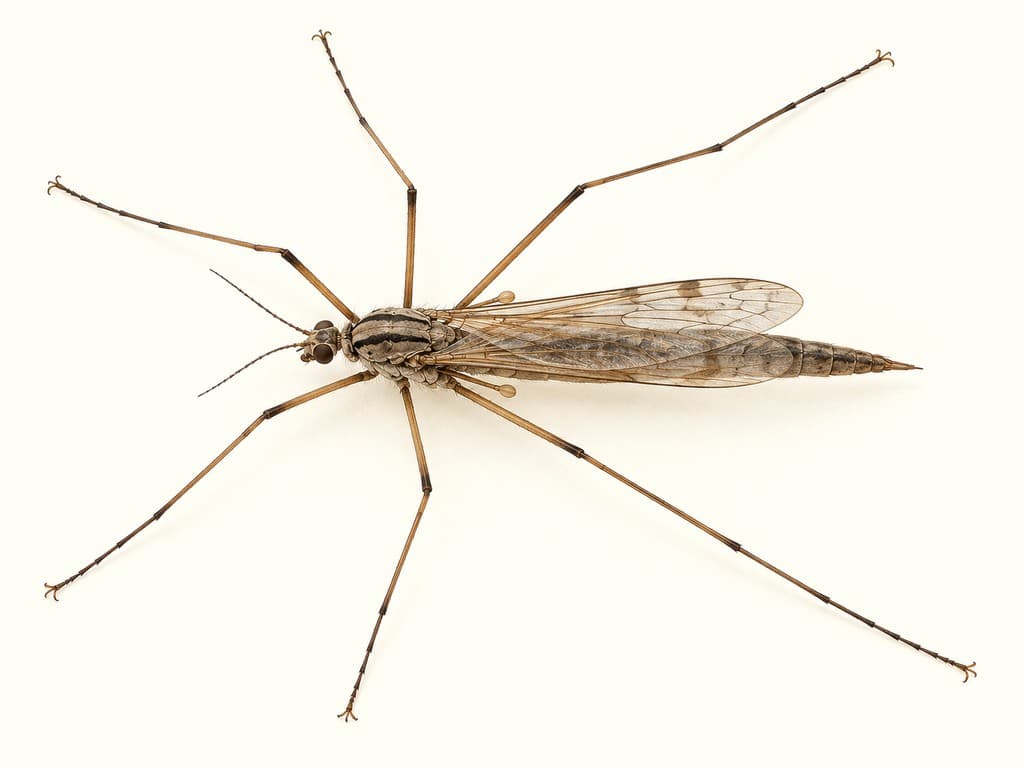
The crane fly is a slender grey-brown fly with six very long legs and a dark stripe along the side of its forebody. It is often seen on house walls and in gardens in early summer, especially June. Its larvae live in damp soil, moss and decaying plant material, helping decomposition. It is harmless, despite its long legs and erratic flight.
Facts
- Latin name
- Tipula rufina
- English name
- Crane fly
- Preferred conditions
- Damp soil, gardens and building walls
- Life cycle
- Flies mainly in early summer and overwinters as a pupa
Response and treatment
Let the insect outside, treatment is usually unnecessary
Treatment depends on the species, extent and circumstances. Products are not always needed. Any products used are permitted for the intended use in Iceland. Follow their instructions and the pest-control professional’s guidance.
Do you have an unwelcome visitor?
Call and describe it. Advice is free, and one phone call often solves the problem.