Pest guide
Western honeybee
Apis mellifera
- Do you need a pest-control professional?
No
Professional treatment is usually unnecessary. Possible response: Let an individual outside, contact a beekeeper about a swarm.
- Potential harm
Pollinates flowers, but females can sting if disturbed
- What to expect
Possible response: Let an individual outside, contact a beekeeper about a swarm. If you are unsure of the species, call and describe what you found before deciding what to do.
Not sure? Call and describe it. Identification by phone is free.
About this species
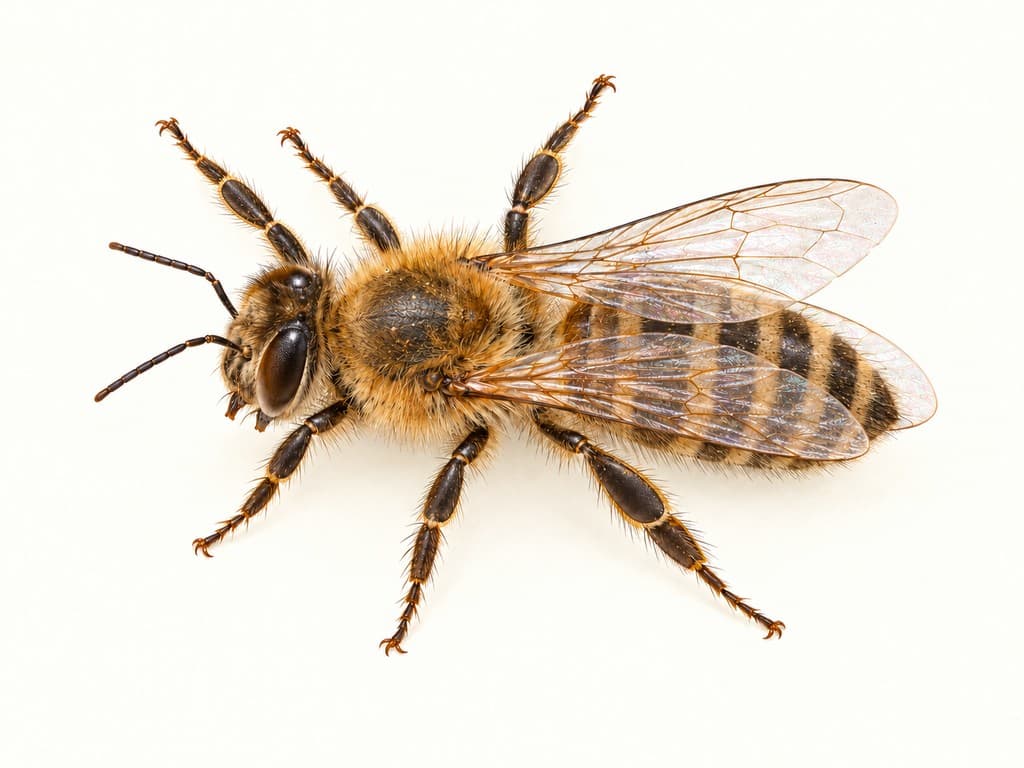
The western honeybee is a brownish hairy bee that gathers nectar and pollen. It is slimmer than a bumblebee and lives in wax combs in hives managed by beekeepers in Iceland. Honeybees pollinate flowers and are not household pests, although they may stray through open windows. A swarm settling beside a building should be assessed by a beekeeper.
Facts
- Latin name
- Apis mellifera
- English name
- Western honeybee
- Preferred conditions
- Flowers and hives managed by beekeepers
- Life cycle
- The colony can survive from year to year in a beekeeper’s care
Response and treatment
Let an individual outside, contact a beekeeper about a swarm
Treatment depends on the species, extent and circumstances. Products are not always needed. Any products used are permitted for the intended use in Iceland. Follow their instructions and the pest-control professional’s guidance.
Do you have an unwelcome visitor?
Call and describe it. Advice is free, and one phone call often solves the problem.