
Pest guide
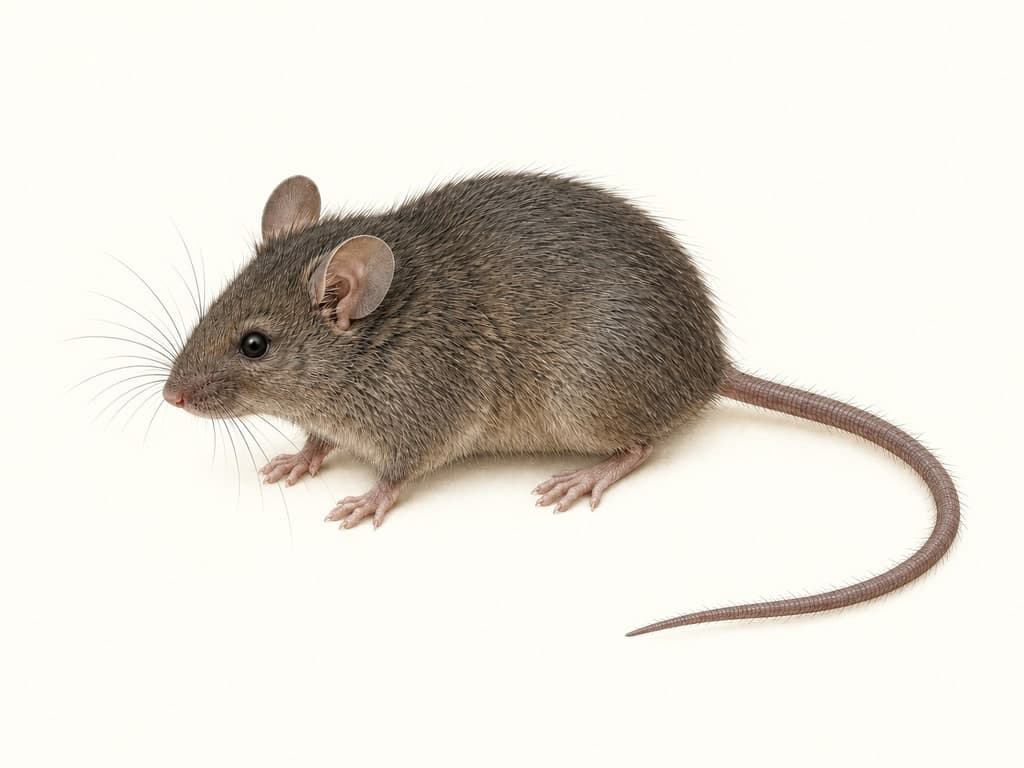
House mouse
Mus musculus
13–19 cm
- Do you need a pest-control professional?
It depends
Whether professional treatment is needed depends on the extent and circumstances. Possible response: Traps, sealing entry points and follow-up as needed.
- Potential harm
Gnaws food, packaging and pipework
- What to expect
Possible response: Traps, sealing entry points and follow-up as needed. If you are unsure of the species, call and describe what you found before deciding what to do.
Not sure? Call and describe it. Identification by phone is free.
About this species
The house mouse is a dark grey or grey-brown rodent with an 8–9 cm body and a tail of similar length, living indoors throughout the year. It eats many foods and does not store supplies, so it moves frequently between food and its nest. Early signs include small black droppings in cupboards, gnawed packages and scratching inside walls or ceilings at night. Mice mature at five to six weeks and breed indoors year-round, so signs should be addressed early.
Facts
- Latin name
- Mus musculus
- English name
- House mouse
- Preferred conditions
- Homes and outbuildings
- Life cycle
- Varies with conditions and life stage
Response and treatment
Traps, sealing entry points and follow-up as needed
Treatment depends on the species, extent and circumstances. Products are not always needed. Any products used are permitted for the intended use in Iceland. Follow their instructions and the pest-control professional’s guidance.
Do you have an unwelcome visitor?
Call and describe it. Advice is free, and one phone call often solves the problem.