Pest guide
House fly
Musca domestica
Adult: 6–9 mm · Larva: 7–12 mm
- Do you need a pest-control professional?
It depends
Whether professional treatment is needed depends on the extent and circumstances. Possible response: Find the source, clean and control flies as needed.
- Potential harm
Can carry pathogens onto food
- What to expect
Possible response: Find the source, clean and control flies as needed. If you are unsure of the species, call and describe what you found before deciding what to do.
Not sure? Call and describe it. Identification by phone is free.
About this species
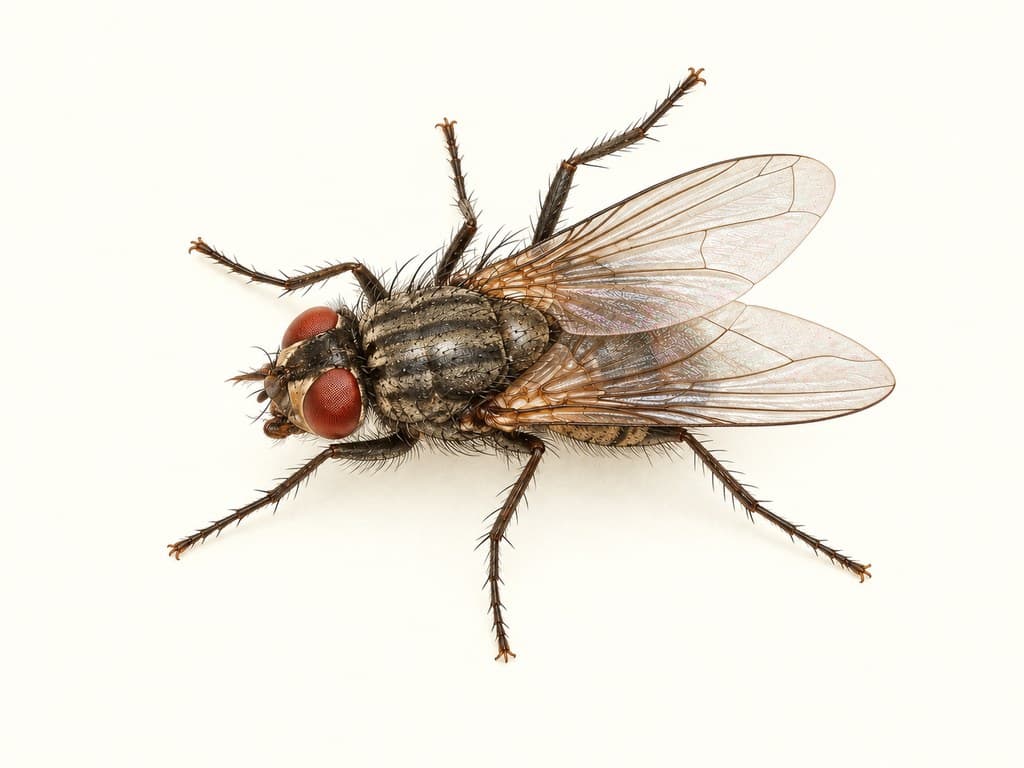
The house fly is a grey fly with four dark stripes on its forebody, familiar around kitchens and windows. It breeds in organic waste such as bins, compost heaps and leftover feed, with larval development depending on temperature and conditions. Flies can transfer germs from waste to food. Prevention centres on cleanliness and tightly closed bins, while food businesses need organised fly control.
Facts
- Latin name
- Musca domestica
- English name
- House fly
- Preferred conditions
- Organic waste
- Life cycle
- Adult flies may live about a month, overwintering can extend their lifespan
Response and treatment
Find the source, clean and control flies as needed
Treatment depends on the species, extent and circumstances. Products are not always needed. Any products used are permitted for the intended use in Iceland. Follow their instructions and the pest-control professional’s guidance.
Do you have an unwelcome visitor?
Call and describe it. Advice is free, and one phone call often solves the problem.